

21 Jan Creating an Effective SEO Strategy for Social
Key Terms Defined in This Article
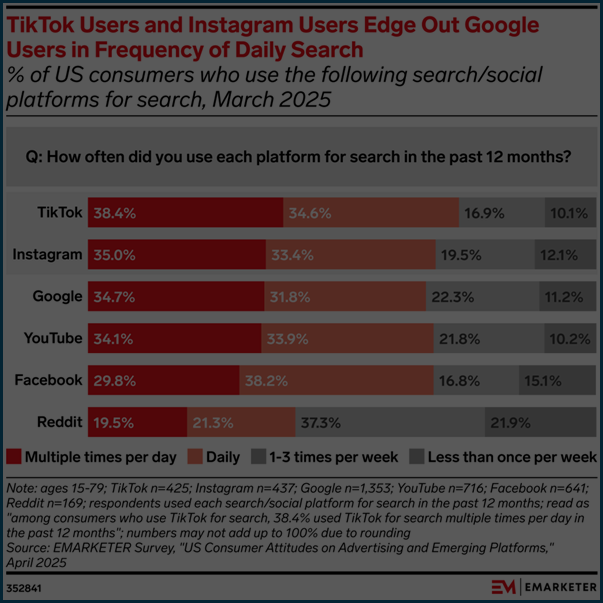
Fast forward to today, and that same question still drives SEO. Only now, the search engines are not just Yahoo, Mozilla, Bing, and Google. The landscape has expanded to include Meta, TikTok, Reddit, YouTube, and beyond. SEO is no longer confined to websites alone. It has become an integral part of social strategy, and brands must build systems that help their content get found wherever audiences are actively searching.
What Is SEO?
Search Engine Optimization, or SEO, is the practice of improving visibility in search results to attract more relevant, unpaid traffic. Traditionally, this meant optimizing websites so search engines could better understand and rank pages for specific queries. Today, those same principles apply across social platforms.
In simple terms, SEO involves using specific keywords in both creative and copy so technology can understand what content is about and match it to what users are searching for. As Google explains, “SEO is about helping search engines understand your content and helping users find your site and decide whether they should visit.”
Why Does SEO Matter for Social Media?
SEO is now critical for social for two key reasons:
Reason 1: Social Platforms Feed Into Larger Search Engines
Platforms like Reddit and Meta influence what appears in Google search results. Meta now allows Google to index public posts, making social content searchable directly through Google. According to Meta, “Public content from professional accounts can be indexed by search engines,” opening the door for social posts to surface well beyond native platforms. At the same time, search behavior informs ad targeting, meaning what users search for on Google can influence what they see on Instagram, and vice versa.
Reason 2: Social Platforms Are Becoming Search Engines Themselves
Users are not only scrolling but actively searching for information, recommendations, and how-to content directly within apps. TikTok has stated that “1 in 4 people search for something within 30 seconds of opening the app,” reinforcing the idea that discovery is increasingly intentional. This shift changes how brands should think about content creation and optimization.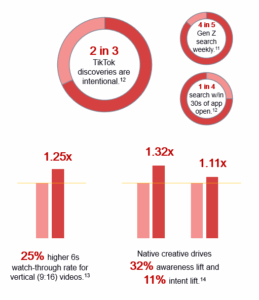
How Do You Create an Effective SEO Strategy for Social Media?
An effective SEO strategy for social begins with optimizing both the brand profile as well as the content to improve visibility. This includes the use of keywords, hashtags, and engaging creative, as well as leveraging platform-specific features that influence indexing and discovery. Below are key strategy components to consider.
What Are the Core Components of a Social Media SEO Strategy?
What Is Keyword Optimization for Social Media?
Keyword optimization starts with researching the terms your audience is actively searching for. These keywords should be incorporated naturally into bios, profile names, captions, and even on screen text in videos.
What Are Long Tail Keywords?
Long tail keywords also play an important role here. Long tail keywords are longer, more specific search phrases that reflect higher intent. HubSpot defines long tail keywords as “highly specific search terms that typically have lower search volume but higher conversion value.” Content that answers these specific queries tends to perform better because it closely aligns with user intent and the platforms can match the query to the content with great success.
How to Implement Keyword Optimization:
- Research relevant keywords for your audience
- Incorporate them naturally into your bios, profile names, and captions
- Include keywords in on-screen text in videos
- Use long-tail keywords to answer user questions in your content
What Is Profile Optimization for Social SEO?
Profiles act as the foundation of social SEO. Clear, searchable usernames and display names make it easier for platforms to categorize accounts. Bios should be fully completed and include relevant keywords that describe what the brand does and who it serves. As TikTok advises creators, “Clear bios and usernames help our system understand what your account is about.”
Profile Optimization Checklist:
- Choose clear, searchable usernames and display names
- Fill out your bio completely with relevant keywords
- Ensure profiles are complete and professional
Why Is Quality Content Important for Social SEO?
High quality content remains the most important factor. Content should provide value by being informative, entertaining, or useful. Engagement signals such as likes, shares, comments, and saves help platforms understand what resonates.
What Are Native Formats and Why Do They Matter?
Additionally, using platform native features increases visibility, as algorithms often prioritize native formats. Native formats include items like stickers, polls, native sound, etc. As each platform releases new features, they often prioritize it in the algorithm.
For example, when Instagram added music as an option for carousel posts with video we saw that carousel content perform significantly better amongst our clients using the new feature in that time frame indicating that the platform was prioritizing the new format. In the same way, while TikTok allows multiple sizes of images and videos to be uploaded, we know that TikTok is a vertical-first platform. So it was not surprising to see that TikTok research shows that vertical video formats drive stronger performance, with “a 25 percent higher six second watch through rate for vertical video.”
Quality Content Best Practices:
- Create high-quality, valuable, entertaining, or informative content
- Encourage engagement through likes, shares, comments, and saves
- Use platform-native features (e.g., Reels, Stories, Guides)
- Optimize images with descriptive alt text
What Role Does Link Building Play in Social SEO?
Links remain important for driving traffic and credibility. Including links in bios and posts helps guide users to additional content. Creating content people want to share can also generate backlinks, which improves overall authority and visibility across platforms.
Link Building Strategy:
- Include links to your website in your bio and posts where appropriate to drive traffic
- Earn backlinks by creating content people want to share, which boosts domain authority
How Do You Monitor and Adapt Your Social SEO Strategy?
SEO is not static. Performance data should be reviewed regularly to understand what resonates and why. According to Google, “There are hundreds of factors that go into ranking,” which means ongoing testing and iteration are essential. Brands should use analytics to see what resonates with your audience and adjust the strategic tactics from there. Additionally, it’s imperative to stay updated on algorithm changes and adjust your strategy accordingly.
Monitoring and Adaptation Steps:
- Use analytics to see what resonates with your audience and adjust your strategy
- Stay updated on algorithm changes and adjust accordingly
- Review performance data regularly
- Test and iterate based on results
How Does Social SEO Work in Practice? A TikTok Case Study
SEO strategies are most effective when applied platform by platform. Recently, we implemented a dedicated SEO approach for TikTok that illustrates how these principles come to life in a three-pronged approach:
Step 1: How Do You Understand What Users Are Searching For on TikTok?
TikTok’s search patterns reveal clear user intent, with repeated phrases and themes pointing to high-volume interest areas. Common questions, pain points, and category topics consistently surface across competitor content, highlighting what audiences actively seek out.
Step 2: How Do You Optimize Content for Discoverability on TikTok?
TikTok indexes keywords, making it essential to reinforce primary keywords across multiple elements of a video.
TikTok Keyword Placement Priorities:
- Spoken audio – especially important within the first three seconds
- On screen text – especially in the first three seconds
- Subtitles – auto-transcribed content supports indexing
- Captions – first 100 characters are prioritized
- Hashtags – limited to one to four relevant terms
TikTok confirms that “keywords used in captions, audio, and text help our system categorize content.”
Why Is Native Creative Important on TikTok?
Native creative plays a critical role. TikTok native visual styles, sounds, and editing techniques drive stronger engagement. TikTok Marketing Science reports that “native creative drives 32 percent higher awareness lift and 11 percent higher intent lift.”
Step 3: What Are the Most Search-Friendly Content Formats on TikTok?
Certain video formats naturally align with how people search on TikTok:
- How-to videos
- List-based content
- Product demonstrations
- Step-by-step explanations
- Clear single-topic videos
These formats make it easier for TikTok to interpret content and match it to relevant queries. These formats improve ranking potential because they closely mirror user intent and search behavior.